




Tulsi / Holy Basil
Wikipedia: Ocimum_tenuiflorum | Teaviews: holy-basil-teaLast Updated: Jun. 4, 2014
↑About Tulsi / Holy Basil
Tulsi tea, also called holy basil tea, is an herbal tea made from the tulsi or holy basil plant, Ocimum tenuiflorum, sometimes named Ocimum sanctum, a close relative of sweet basil.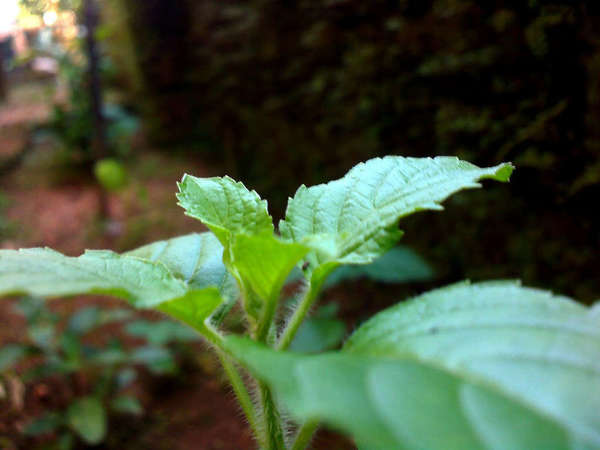
Tulsi is important in Ayurveda, the traditional medicine of India, and the plant also has spiritual significance in Hinduism. The leaf is used both as a seasoning and in herbal tea, both on its own and in blends.
Tulsi is usually classified into two varieties, Rama tulsi, which has green leaves, and Krishna Tulsi, with red or purple leaves. Each of these varieties is named for a Hindu avatar, Krishna, and Rama. Another variety of this species is also used as a seasoning in Thai food; this variety is called Thai holy basil or kha phrao (กะเพรา), and is not the same species as the usual "Thai basil" which is a variety of the sweet basil plant Ocimum basilicum.
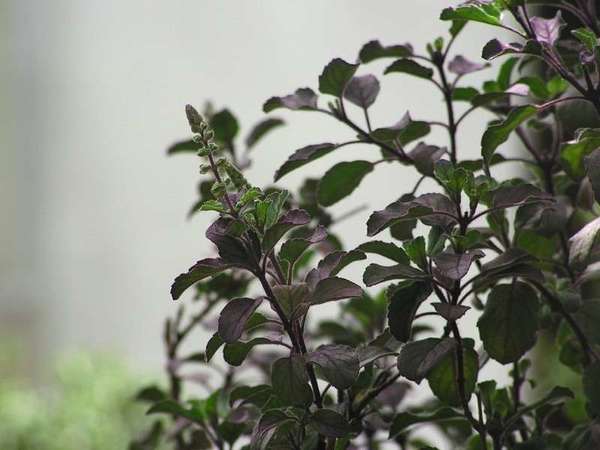 A tulsi plant of the purple-leafed variety. Public domain photo.
Tulsi is easy to grow and has requirements similar to sweet basil; it likes sun, and can be grown as a perennial in tropical climates and an annual in colder climates.
Medicinal uses and health benefits
Tulsi has been studied for a wide variety of health uses and purposes; although the research is young and some of it is not fully conclusive, there is evidence that the plant has a wide variety of potential health benefits. Many aspects of its traditional use in Ayurvedic medicine are starting to be validated by studies on rats and mice, and a few on humans. Herbalists classify tulsi as an adaptogen, an herb that is non-toxic and safe for general use, and that has a normalizing effect on physiology. There are, however, a few potential concerns with the use of this particular plant.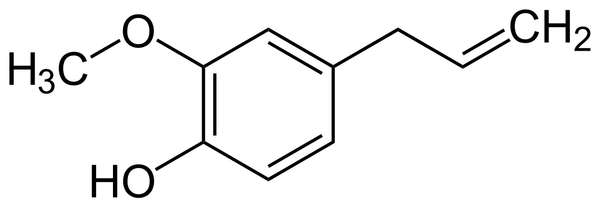 Eugenol is one of the many active chemical constituents of Ocimum tenuiflorum. Eugenol is also the main component of clove oil, which explains the clove-like aroma of tulsi leaf.
Holy basil has been used to treat depression and anxiety. A recent human clinical study found that the plant extract had significant effects at treating both depression and generalized anxiety disorders.[7] The plant has also been found in studies on mice to have nootropic properties, aiding memory and preventing dementia and Alzheimer's disease.[8] There is also evidence from studies on rats that the plant can significantly lower blood sugar, both in normal and diabetic rats, justifying its traditional use for treating diabetes. An alcohol extract of holy basil was compared to the drug Tolbutamide, and showed about 70-90% of the same blood-sugar-lowering effect as this drug.[9]
Side effects, health risks, and cautions
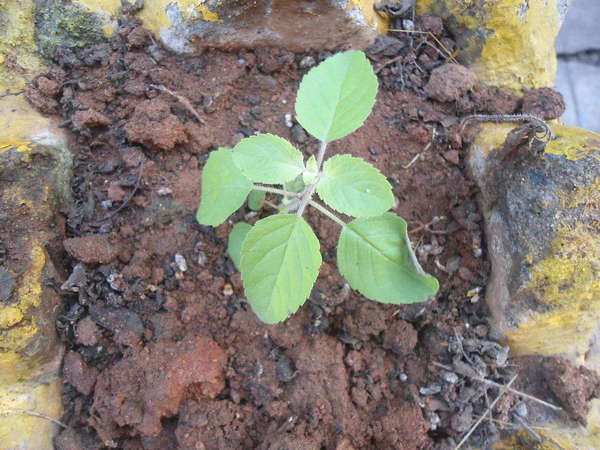 The purity of the soil in which tulsi is grown is important as the holy basil plant can absorb and concentrate chromium to harmful levels. Photo © Adityamadhav83 (Wikimedia Commons), CC BY-SA 3.0.
Chromium can damage the liver and kidneys. Tulsi grown in polluted areas is thus not safe for human consumption.[10] You can avoid this problem by buying organic tulsi and being familiar with the source of the herb, or by growing your own herb in soil that you are familiar with.
When dealing with the pure plant itself, when contamination is not an issue, the main side-effect associated with tulsi is that it functions as a blood thinner. There is some evidence that tulsi can slow blood clotting, with an effect comparable to that of aspirin;[11] it should be used with caution in situations where slowed blood clotting could be harmful, such as before surgery or childbirth, or in people who are taking prescription blood thinning medications such as the drug Warfarin.
This effect is relatively common among other herbs; chamomile is another herb with similar properties.
References:
1. M. Shynu, M. Saini, B. Sharma, L.K. Gupta, P.K. Gupta, Ocimum tenuiflorum possesses antiviral activity against bovine herpes virus–1, Indian Journal of Virology, Vol. 17, No. 1, 2006.
2. M. Shynu, Gupta Praveen, Sharma Bhaskar, Saini Mohini, Immunomodulatory potential of Ocimum tenuiflorum extracts in bovine peripheral blood mononuclear cells in vitro, Journal of Immunology and Immunopathology Vol. 9, No. 1&2, 2007.
3. R.R. Chattopadhyay, S.K. Sarkar, S. Ganguly, C. Medda, T.K. Basu, Hepatoprotective activity of Ocimum sanctum leaf extract against paracetamol induced hepatic damage in rats, Indian Journal of Pharmacology, Vol. 24, No. 3, 1992.
4. Pratima Nangia-Makker, Larry Tait, Victor Hogan, Fred Miller and Avraham Raz, Inhibition of breast cancer progression by a medicinal herb Ocimum sanctum, Proceedings of the American Association of Cancer Research, Vol. 47, 2006.
5. Venkataraman Magesh et. al., Ocimum sanctum induces apoptosis in A549 lung cancer cells and suppresses the in vivo growth of lewis lung carcinoma cells, Phytotherapy Research, Vol. 23, No. 10, 2009.
6. J. Sethi, S. Singh, S. Sood, A. Talwar, S. Seth, Antistressor activity of Ocimum Sanctum (Tulsi) against experimentaly induced oxidative stress in rabbits, Methods Find Exp Clin Pharmacol, Vol. 29, No. 6, 2007.
7. D. Bhattacharyya et. al., Controlled programmed trial of Ocimum sanctum leaf on generalized anxiety disorders. Nepal Med Coll J., Sep. 2008, Vol. 10, No. 3, pp. 176-9.
8. Hanumanthachar Joshi, Milind Parle, Evaluation of nootropic potential of Ocimum sanctum Linn. in mice, Indian-J-Exp-Biol., Feb. 2006, Vol. 44, No. 2, pp.133-6.
9. RR. Chattopadhyay, Hypoglycemic effect of Ocimum sanctum leaf extract in normal and streptozotocin diabetic rats., Indian Journal of Experimental Biology, Vol. 31, No. 11, pp. 891-3, Nov. 1993.
10. Rai Vartika; Vajpayee Poornima; Shri Nath Singh; Mehrotra Shanta, Effect of chromium accumulation on photosynthetic pigments, oxidative stress defense system, nitrate reduction, proline level and eugenol content of Ocimum tenuiflorum L., Plant science, Vol. 167, No. 5, 2004.
11. Surender Singh, H. M. S. Rehan, D. K. Majumdar, Effect of Ocimum sanctum fixed oil on blood pressure, blood clotting time and pentobarbitone-induced sleeping time, Journal of Ethnopharmacology, Vol. 78, No. 2-3, 2001.
↑Recent Tulsi / Holy Basil Reviews — RSS 


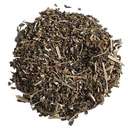
Holy Basil Purple Leaf from Upton Tea Imports
Style: Tulsi / Holy Basil – Region: IndiaJan. 24th, 2021
Clove aroma and taste with additional whiffs of I don't know what.. maybe nutmeg and black pepper.
Overall very pleasant. I got a sample of this and will definitely get more. A good choice late in the day for a caffeine free cup

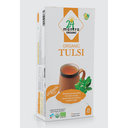
This is a delightfully spicy herbal tea. It sort of wakes you up even without the caffeine. Though a CTC style loose leaf, it resteeps quite well -- but expect to infuse longer for the second cup. It's been a lot time, but I remember thinking this was inexpensive when I got it.
Read Full Review
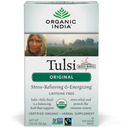
This was my first experience with Tulsi or Holy Basil. I was extremely impressed. The aroma is warm and welcoming with hints of earth, cinnamon, and spices. The flavor is reminiscent of a spearmint tea with spices and perhaps cardamon and cloves. The flavor is well rounded and very enjoyable.
I haven't had it enou...

I've never had tulsi before. It reminded me of chamomile tea, but stronger and more lemon-y, maybe. I really enjoyed it.
Read Full Review
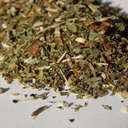
Holy Basil, Rama (Tulsi) from Mountain Rose Herbs
Style: Tulsi / Holy Basil – Region: United States of AmericaNov. 9th, 2014
I tried this tea because the positive ratings by others. It really is a great tea.
The aroma took me by surprise at first. It's hard to describe...Sort of like peppermint. You might expect the tea to taste really sharp judging by the scent. The exact opposite is true. It tastes very smooth and clean. It has a refres...
Read More Reviews of Tulsi / Holy Basil (30) ...
↑Top Reviewers
| Rank | User | # | % |
| 1 |  Alex Zorach Alex Zorach | 9 | 50 |
| 2 |  Brytta Sóþword Brytta Sóþword | 4 | 22 |
| 3 |  Linda Martin Linda Martin | 3 | 17 |
| 4 |  Kelsey Kelsey | 2 | 11 |
| 5 |  E. Alex Gerster E. Alex Gerster | 1 | 6 |
Review 2 teas to get on this list!
Advertisement
↑Most-Rated Tulsi / Holy Basil
Original Tulsi Tea
| Brand: | Organic India |
| Style: | Tulsi / Holy Basil |
| Region: | India |
| Caffeine: | Caffeine Free |
| Leaf: | Teabag |
Holy Basil Purple Leaf
| Brand: | Upton Tea Imports |
| Style: | Tulsi / Holy Basil |
| Region: | India |
| Caffeine: | Caffeine Free |
| Leaf: | Loose |
Holy Basil, Rama (Tulsi)
| Brand: | Mountain Rose Herbs |
| Style: | Tulsi / Holy Basil |
| Region: | United States of America |
| Caffeine: | Caffeine Free |
| Leaf: | Loose |
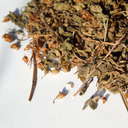
Holy Basil, Krishna (Tulsi)
| Brand: | Mountain Rose Herbs |
| Style: | Tulsi / Holy Basil |
| Region: | India |
| Caffeine: | Caffeine Free |
| Leaf: | Loose |
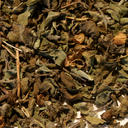
Tulsi (Holy Basil)
| Brand: | Shanti Tea |
| Style: | Tulsi / Holy Basil |
| Region: | India |
| Caffeine: | Caffeine Free |
| Leaf: | Loose |
↑Top-Rated Tulsi / Holy Basil
Holy Basil, Rama (Tulsi)
| Brand: | Mountain Rose Herbs |
| Style: | Tulsi / Holy Basil |
| Region: | United States of America |
| Caffeine: | Caffeine Free |
| Leaf: | Loose |
Holy Basil Purple Leaf
| Brand: | Upton Tea Imports |
| Style: | Tulsi / Holy Basil |
| Region: | India |
| Caffeine: | Caffeine Free |
| Leaf: | Loose |
Original Tulsi Tea
| Brand: | Organic India |
| Style: | Tulsi / Holy Basil |
| Region: | India |
| Caffeine: | Caffeine Free |
| Leaf: | Teabag |


