




Rooibos
Wikipedia: Rooibos | Teaviews: rooibos-teaLast Updated: Sep. 17, 2015
↑About Rooibos
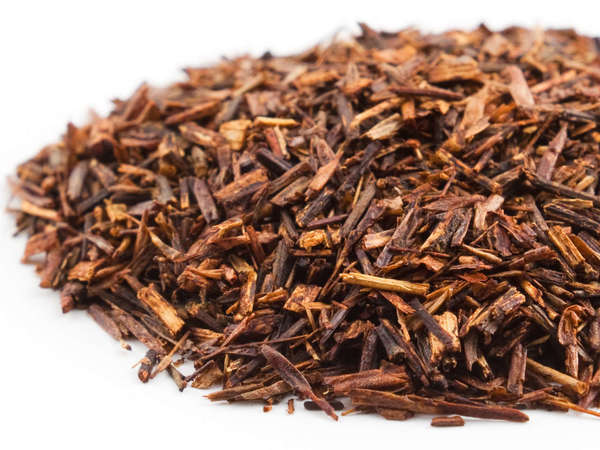 Pure Loose-Leaf Rooibos, South African Red Tea, Photo © André Helbig, CC BY-SA 3.0.
Rooibos is also called redbush tea and sometimes just bush tea, although it is distinct from honeybush, a similar tea from the same region made out of a different plant, also a legume.
Rooibos has a distinctive flavor and aroma, often described as earthy and fruity; it is less bitter than most black tea, but is often described as being among the herbal teas that most closely resembles black tea. Like most herbal teas, it contains no caffeine.
Use in blending with teas, other herbs, and flavorings
Rooibos is frequently used in herbal tea blends, often as a base to impart body or richness. We list herbal teas with rooibos as the dominant ingredient as flavored rooibos. Common ingredients or flavors for blending include vanilla and strawberry, as these blend well with the natural aroma of the herb. Less commonly, the herb can be scented with bergamot to produce a rooibos Earl Grey, or blended with spices to yield rooibos chai or spiced rooibos, a reference to masala chai. Rooibos is also frequently mixed with black, green, or other teas together with other herbal ingredients or flavorings; such blends are listed under miscellaneous blends.Cultivation and production
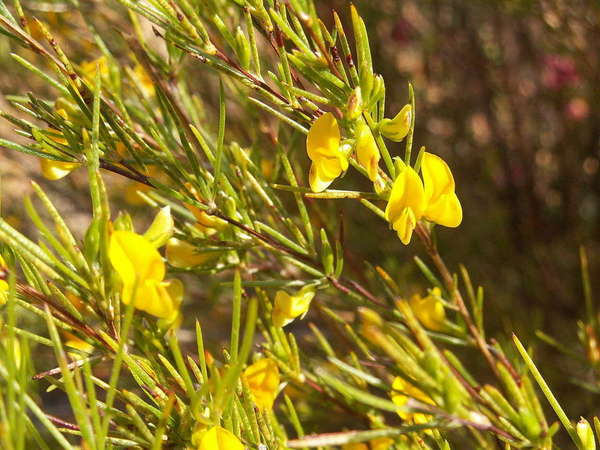 The pea-like flowers of Aspalathus linearis betray its status as a legume. Photo © Winfried Bruenken, CC BY-SA 2.5.
All finished rooibos has a fine texture, owing to the very small needle-like leaves of the plant, although there is a range of grades with different coarseness. Higher grades have a higher ratio of leaf to stem.
More recently, however, people have begun to manufacture green rooibos, which is produced in a process similar to green tea, more similar to Japanese steamed green teas than Chinese pan-fired teas.
Impact of climate change and poverty
Efforts to cultivate rooibos outside the small region where it grows have proved unsuccessful, as it is dependent on the region's unique climate, soils, and other components of the ecosystem. Rooibos production is being threatened by climate change, and many farmers of rooibos live and operate in extreme poverty, complicating measures to adapt to the changing climate.[1]Medicinal uses & health benefits of rooibos
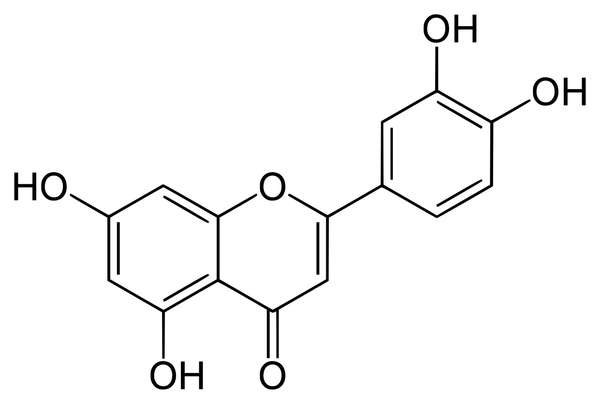 Luteolin is one of many antioxidants present in rooibos. Public domain photo.
Rooibos is frequently promoted as having antioxidant activity comparable to that of tea; a study validated this for both green and red rooibos.[2] The antioxidant activity of rooibos, has been shown in mice to protect against radiation damage, probably by luteolin and possibly other antioxidants neutralizing the free radicals formed by exposure to gamma rays.[3]
In addition, rooibos is widely used in traditional medicine for respiratory ailments such as asthma. A study on rats found significant dose-dependent bronchodilatory effect, providing a sound basis for its use in treating respiratory conditions.[4] Another study on rats found that rooibos provided significant protection against liver damage, in concentrations equivalent to that typically used when humans drink rooibos tea.[5]
Topical use of rooibos in skin care products
Topical application of rooibos (such as its use in creams, cosmetics, and sunscreen) also shows some promise of health benefits. One study found that rooibos, honeybush and green tea, all had tumor-preventing properties in mouse skin, suggesting that these teas hold promise for preventing skin cancer.[6] More recent work has uncovered likely mechanisms by which topical use of rooibos and honeybush reduce tumour promotion, inflammation, and oxidative stress.[7]
References
1. Virginia Marsh, Rooibos tea farmers on the front line of climate change, The Independent, Dec. 18, 2009.
2. A. Von Gadow, E. Joubert, C. F. Hansmann, Comparison of the antioxidant activity of rooibos tea (Aspalathus linearis) with green, oolong and black tea, Food Chemistry, Vol. 60, No. 1, Sep. 1997, pp. 73-77.
3. Radioprotective effects of antioxidative plant flavonoids in mice, Mutation Research/Fundamental and Molecular Mechanisms of Mutagenesis, Vol. 350, No. 1, Feb. 19, 1996, pp. 153-161.
4. Arif-ullah Khan, Anwarul Hassan Gilani, Selective bronchodilatory effect of Rooibos tea (Aspalathus linearis) and its flavonoid, chrysoeriol, European Journal of Nutrition, Vol. 45, No. 8, December, 2006.
5. O Ulicná, et. al., Hepatoprotective effect of rooibos tea (Aspalathus linearis) on CCl4-inducedliver damage in rats., Physiol Res, Vol. 52, No. 4, 2004, pp. 461-466.
6. Inhibition of tumour promotion in mouse skin by extracts of rooibos (Aspalathus linearis) and honeybush (Cyclopia intermedia), unique South African herbal teas, CancerLetters, Vol. 224, No. 2, pp. 193-202, Jun. 2005.
7. Antoinette Petrova, Modulation of ultraviolet light-induced skin carcinogenesis by extracts of rooibos and honeybush using a mouse model: elucidating possible protective mechanisms, (2009). CPUT Theses & Dissertations. Paper 91.
↑Recent Rooibos Reviews — RSS 


Upton Apricot Honey Rooibos Organic from Upton Tea Imports
Style: Rooibos – Region: ?????Feb. 28th, 2023
This is a mellow, apricot-flavored rooibos, with added sunflower petals. It is all organic too, so I guess that means the "natural flavor" is also organic. The aroma is pleasant, and a little reminiscent of breakfast cereal or scented oil. The apricot flavor is certainly noticeable. Why do rooibos teas all have to ...
Read Full Review
This tea was a gift. It is not tea, but rooibos flavored with jasmine. Individual bags are sealed. The aroma is woodsy, cedar like.The flavor is difficult for me to describe, almost medicinal. The jasmine is a noticeable after taste. While I am not a fan of this particular tisane, I would be curious to try the teas the...
Read Full Review
I bought a one-pound mylar bag of Frontier rooibos and transferred it to a couple of airtight jars. While recognizably rooibos, the contents of this bag have an extra note of oregano.
I brewed 5g in 16 ounces of boiling water. The oregano aroma is pronounced. It's good, but less nutty and sweet than I'm used to. I d...
This tea smells really good when it's in the bag. It has a strong banana smell, however it stills smells good in the cup but not as good. I tasted a hint of banana while drinking it and this is quiet interesting.
Read Full ReviewFava Tea Company Chocolate Mint Rooibos Tea from Fava Tea Company
Style: Rooibos – Region: ?????Apr. 15th, 2019
I'm not a big mint fan but I thought I would give this a try. It's a good quality tea but for me it's too minty but after putting some sweetener in it was better.
Read Full ReviewRead More Reviews of Rooibos (41) ...
↑Top Reviewers
| Rank | User | # | % |
| 1 |  Alex Zorach Alex Zorach | 16 | 26 |
| 2 |  b22johansen b22johansen | 4 | 7 |
| 3 |  Dutusa Dutusa | 4 | 7 |
| 4 |  Amanda Amanda | 3 | 5 |
| 5 |  Brytta Sóþword Brytta Sóþword | 2 | 3 |
Review 3 teas to get on this list!
Advertisement
↑Most-Rated Rooibos
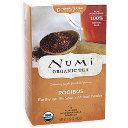
Rooibos (Formerly Red Mellow Bush)
| Brand: | Numi Organic Tea |
| Style: | Rooibos |
| Region: | South Africa |
| Caffeine: | Caffeine Free |
| Leaf: | Teabag |
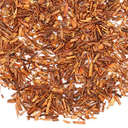
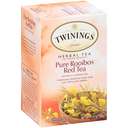
Pure Rooibos Red Tea (African Rooibos)
| Brand: | Twinings |
| Style: | Rooibos |
| Region: | South Africa |
| Caffeine: | Caffeine Free |
| Leaf: | Teabag |
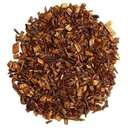
South African Rooibos (Red Bush) Superior
| Brand: | Upton Tea Imports |
| Style: | Rooibos |
| Region: | South Africa |
| Caffeine: | Caffeine Free |
| Leaf: | Loose |
↑Top-Rated Rooibos
Pure Rooibos Red Tea (African Rooibos)
| Brand: | Twinings |
| Style: | Rooibos |
| Region: | South Africa |
| Caffeine: | Caffeine Free |
| Leaf: | Teabag |
Rooibos (Formerly Red Mellow Bush)
| Brand: | Numi Organic Tea |
| Style: | Rooibos |
| Region: | South Africa |
| Caffeine: | Caffeine Free |
| Leaf: | Teabag |


